Chronic Joint Pain
Microsurgical Denervation: Pain relief while preserving mobility
A Medical Innovation Originating in Munich
When chronic joint pain significantly limits daily life, major orthopedic procedures such as joint fusions or artificial joint replacements are often offered as the only solution. However, plastic and reconstructive surgery offers a highly effective, minimally invasive alternative: microsurgical joint denervation.
This elegant concept has deep historical roots in Munich, where the fundamental understanding of joint innervation was first established in 1857 by the anatomist Nikolaus Rüdinger. Today, Dr. Megerle continues this Munich tradition. He utilizes state-of-the-art microsurgical techniques to selectively divide pain-conducting nerve fibers while leaving the complex mechanics of the joint completely intact.

When is Denervation the Right Choice?
Joint denervation is an excellent surgical option if you suffer from chronic, localized joint pain, but your joint is still stable and has good mobility. It is absolutely necessary that all other orthopedic or systemic causes—such as pronounced instability or active infections—have been thoroughly ruled out beforehand.
Patients experiencing continued pain of unclear origin after a previous joint replacement may also be good candidates for microsurgical denervation.
The advantages of this procedure are clear:
- Preservation of Anatomy: The structural integrity of the joint is fully preserved without the need for artificial prostheses or foreign materials.
- Low Impact: The procedure is minimally invasive, has a very low complication rate, and can under certain circumstances be performed under local anesthesia.
- Rapid Recovery: Unlike major joint surgeries, denervation generally does not require post-operative immobilization, allowing for immediate and natural mobilization.
Commonly Treated Joints
Because every joint in the body has a specific nerve supply, this surgical technique can be adapted to treat chronic pain in various parts of the body.
- Wrist: Complete or partial wrist denervation is the most frequently performed procedure of this kind and has historically high success rates (with good to excellent results in about 80% of cases, depending on the specific technique).
- Hand & Fingers: Effective for pain in the thumb saddle joint as well as the middle and base joints of the fingers.
- Upper Extremity: The technique can be successfully applied to alleviate chronic pain in the shoulder and elbow joints.
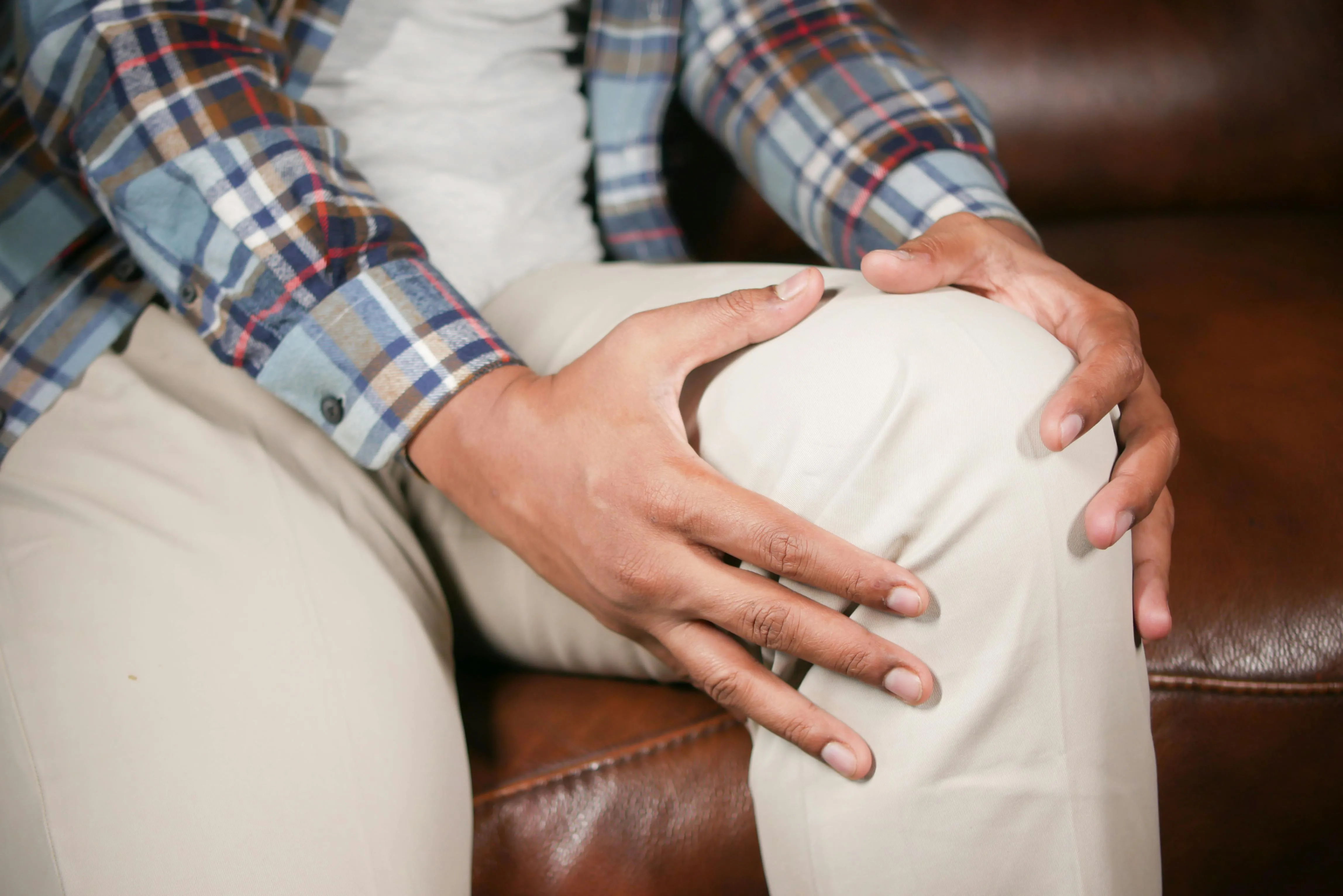
- Lower Extremity: Denervation is an increasingly valuable tool for treating stubborn pain in the knee (especially pain persisting after knee replacements or trauma) and the ankle.

Frequently Asked Questions
What is microsurgical joint denervation?
Microsurgical joint denervation is a highly effective, yet often overlooked therapy where specific nerve branches responsible for transmitting pain signals from a joint are selectively divided. This pain relief is achieved without altering the mechanical structure of the joint.
How do I know if I am a candidate for this surgery?
This procedure is considered an excellent alternative to joint fusion (arthrodesis) or joint replacement (arthroplasty) when a joint is painful but still has good mobility. A prerequisite is that severe joint instability, active infections, and other neurogenic causes (such as carpal tunnel syndrome) have been completely ruled out prior to surgery.
How can the success of the procedure be predicted?
Before deciding on surgery, we perform a targeted diagnostic test using local anesthetics (test block) on the specific joint nerves. If this test injection results in at least a 50% reduction in pain, the likelihood of a successful, long-term surgical outcome is very high.
What are the main advantages of joint denervation?
The surgery is minimally invasive, has a low risk profile, and preserves the natural anatomical structure of the joint. No foreign materials or implants are required. The procedure can often be performed under local anesthesia and typically requires no post-operative immobilization, allowing for immediate mobilization.